Future-proof. The only city with 5 methods of trade

Brownsville, the 18th largest city in Texas and the 3rd largest border city offers five methods of international transportation: water, rail, highway, air, and space. The city’s well-developed infrastructure and dedicated, bilingual workforce make it a major hub for international trade and logistics. The Port of Brownsville’s Foreign Trade Zone No. 62 ranks high nationally for the value of imports and exports, supporting the region’s vibrant economy.

Brownsville is home to several key players in the logistics and distribution sector, making it a vital hub for international trade.

Foreign Trade Zone (FTZ) No. 62 is administered by the Port of Brownsville. In the Foreign-Trade Zones Board’s most recent annual report (2024), FTZ No. 62 ranked 3rd in the nation for export value at about $7 billion, its 12th consecutive year in the top three, and 14th for imports at about $3.2 billion, for more than $10 billion in combined trade. The zone set an earlier record of $13.9 billion in 2022, and this consistent performance makes it one of the top foreign-trade zones in the country.

Top Commodities: The zone primarily deals with petroleum products, machinery and equipment, metals and minerals, iron and steel, and textiles and footwear. Approximately 113 businesses operate within FTZ No. 62, benefiting from streamlined customs procedures and logistical advantages that enhance their competitiveness in the global market.

Located on the Texas-Mexico border, FTZ No. 62 is ideally positioned for “twin plant” operations, facilitating cross-border trade and manufacturing. The zone offers comprehensive support services, including banks, customs brokers, trucking services, and freight forwarders. Companies can lease warehouse space or construct their facilities.

BRO Airport
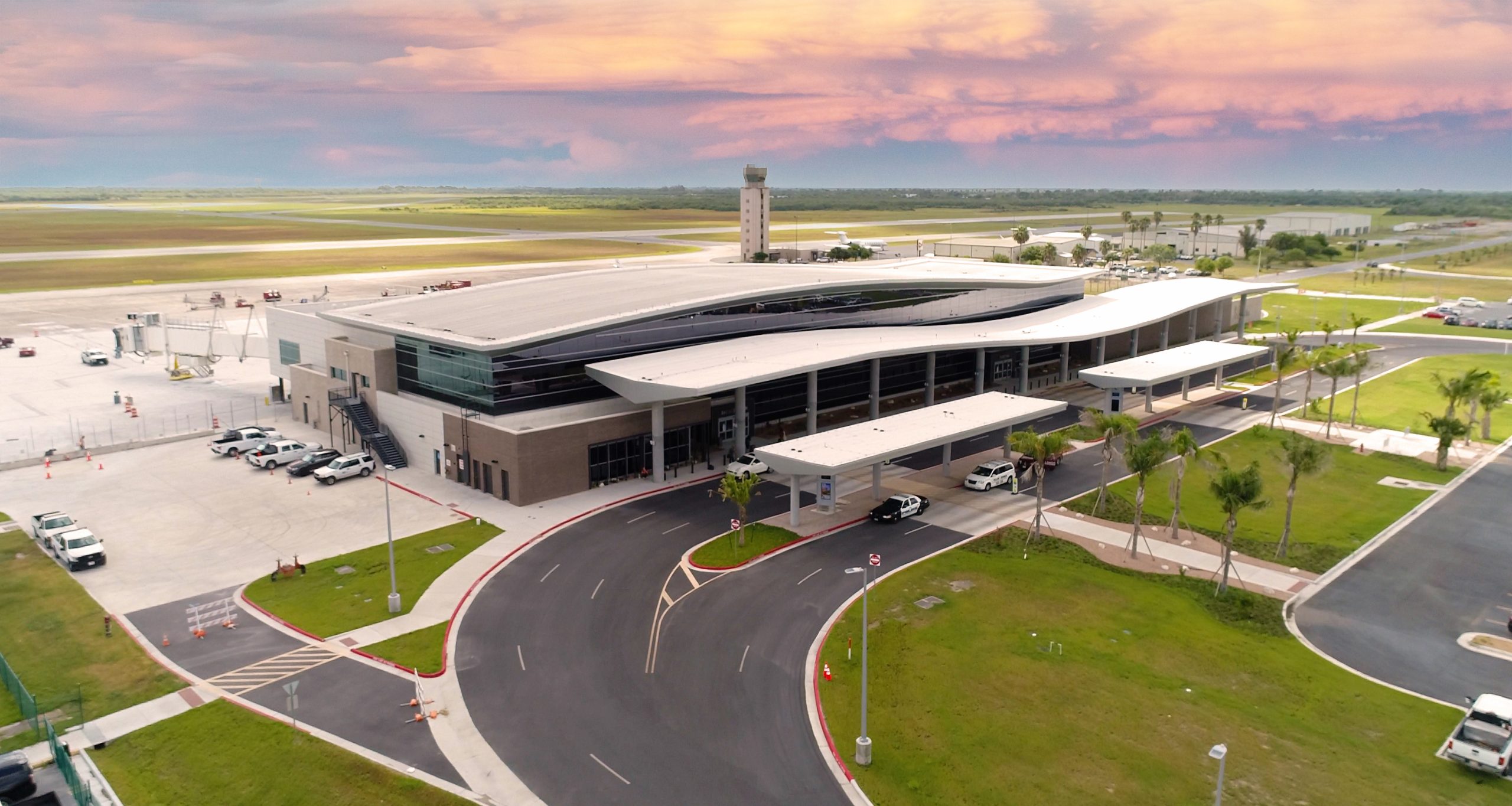
Brownsville Airport Terminal

Brownsville/South Padre Island International Airport (BRO) is a critical transportation hub for both passenger and cargo operations. It has three runways, including the longest at 7,399 feet, and offers nonstop flights to Dallas/Fort Worth (DFW) and Houston (IAH).

In 2024, BRO handled 188,157 passenger boardings (an estimated 380,000 total passengers), along with over 24,000 aircraft operations. The airport was inaugurated by Charles Lindbergh in 1929, and the street in front of it is named after Amelia Earhart, who attended the dedication. Its location near the Gulf of Mexico, the U.S.-Mexico border, and the SpaceX launch facility makes it vital for regional and international connectivity.

Source: FAA Commercial Service Enplanements, CY2024

NAFTA Industrial Park

The NAFTA Industrial Park in Brownsville offers prime access to the U.S.-Mexico border, the Port of Brownsville, and the Brownsville-South Padre Island International Airport. Featuring four buildings with a total of 400,000 square feet, the park provides industrial spaces ranging from 50,000 to 100,000 square feet, equipped with cross-docking capabilities. The park is ideal for warehousing and distribution with rental rates around $6.00 per square foot per year. Its proximity to the Port of Brownsville and potential LNG and oil and gas companies enhances its strategic importance, making it a vital hub for industrial activities in the region.

Valley International Airport

Valley International Airport (HRL) in Harlingen, Texas, is a major logistics hub in the Rio Grande Valley; the airport supports significant cargo operations, handling approximately 60,000 tons of freight annually, with major carriers like DHL Aviation and FedEx Express operating facilities on-site. The development of the NAFTA CargoPort™ has positioned HRL as the Air Cargo Hub of the Rio Grande Valley, providing critical connections for international trade. With the longest runway in South Texas and strategic proximity to major highways and the U.S.-Mexico border, Valley International Airport is essential for efficient freight movement and supply chain optimization.

FINSA Industrial Park

The FINSA Industrial Park at Los Indios, located on Joaquin Cavazos Road No. 107, Los Indios, Texas, offers strategic advantages for businesses with its proximity to the U.S.-Mexico border, the Port of Brownsville, and major highways. This modern industrial park provides ample space for manufacturing, warehousing, and distribution and is equipped with essential infrastructure and support services like utilities, security, and maintenance. As part of Foreign Trade Zone No. 62, it plays a crucial role in the region’s economic growth by attracting businesses and facilitating international trade, making it an ideal location for optimizing supply chain operations.

These entities, along with Brownsville's robust infrastructure and pro-business climate, make it a significant player in the logistics and distribution industry.

Interstate Highways & 4 Landports

Brownsville, the 18th-largest city in Texas and the 3rd-largest border city, offers five modes of international transportation: water, rail, highway, air, and space.

Connected rapidly to Houston, San Antonio, Austin, Laredo, Monterrey, Ciudad Victoria, and beyond.

4 International Crossings:

Veterans International Bridge

Gateway International Bridge

Brownsville & Matamoros (B&M) Bridge

West Rail Bridge

Source: Texas Demographics, Texas cities by population.

FACTS
Annual Cross Border Trade

More than $10 billion in combined exports and imports moved through Foreign Trade Zone No. 62 in the Foreign-Trade Zones Board’s 2024 report: 3rd in the U.S. for export value (about $7 billion) and 14th for imports (about $3.2 billion).

Source: Port of Brownsville

Success Stories

Get Business Support in Brownsville